Almost every host starts with a spreadsheet, and there's nothing wrong with that. It's free, it's flexible, and for a single property with a handful of bookings a month, it does the job. The question isn't whether a spreadsheet can work. It's whether it's still the right tool once things get busier, and that point arrives quieter than most hosts expect.
The signs it's time to move on
You've had a formula break, or nearly missed one that did
A dragged cell, a copied row that didn't update a reference, a total that quietly stopped including the last three entries: every spreadsheet user has a story like this. The scary part isn't when you catch it. It's the version of the story where you don't, and a wrong number sits there for months looking correct.
You're checking numbers from your phone more than your laptop
Spreadsheets were built for a desk. Standing at a turnover with a guest's suitcase in the hallway, pulling up a spreadsheet app on a phone to check whether a payout's been logged is exactly the situation where it starts to feel like the wrong tool for the job.
You manage more than one property
One spreadsheet per property, or one spreadsheet with property as just another column, both get uncomfortable past two or three properties. Comparing occupancy or income across a small portfolio starts requiring its own separate summary tab, which is itself just another thing that can drift out of sync with the source data.
None of this means the spreadsheet was ever wrong. It means the maintenance cost has quietly passed the cost of switching.
Reconciling payouts takes real time
If matching a booking to the payout that eventually pays for it means manually cross-checking dates and amounts, that's a task that scales badly. It's fine at ten bookings a month. It's a real chunk of an evening at forty.
Tax season involves a rebuild, not an export
If getting the year's numbers ready for an accountant means going back through the whole spreadsheet checking everything adds up, rather than pressing export, that's the clearest sign the system is costing more time than it's saving.
What actually changes when you switch
The honest answer: not the underlying job. You're still logging bookings, tracking expenses, and matching payouts. What changes is that the fragile parts stop being fragile.
- No formulas to break. A dragged cell simply isn't possible when there's no cell to drag.
- Built for a phone, not adapted to one. Logging an expense or checking a number works the same standing in a hallway as it does at a desk.
- Payouts link to bookings automatically instead of needing a manual cross-check.
- Reports are already worked out: income vs. expenses, occupancy, average nightly rate, rather than a summary tab you maintain by hand.
- A finished year can be locked, so it can't be edited by accident after it's been filed.
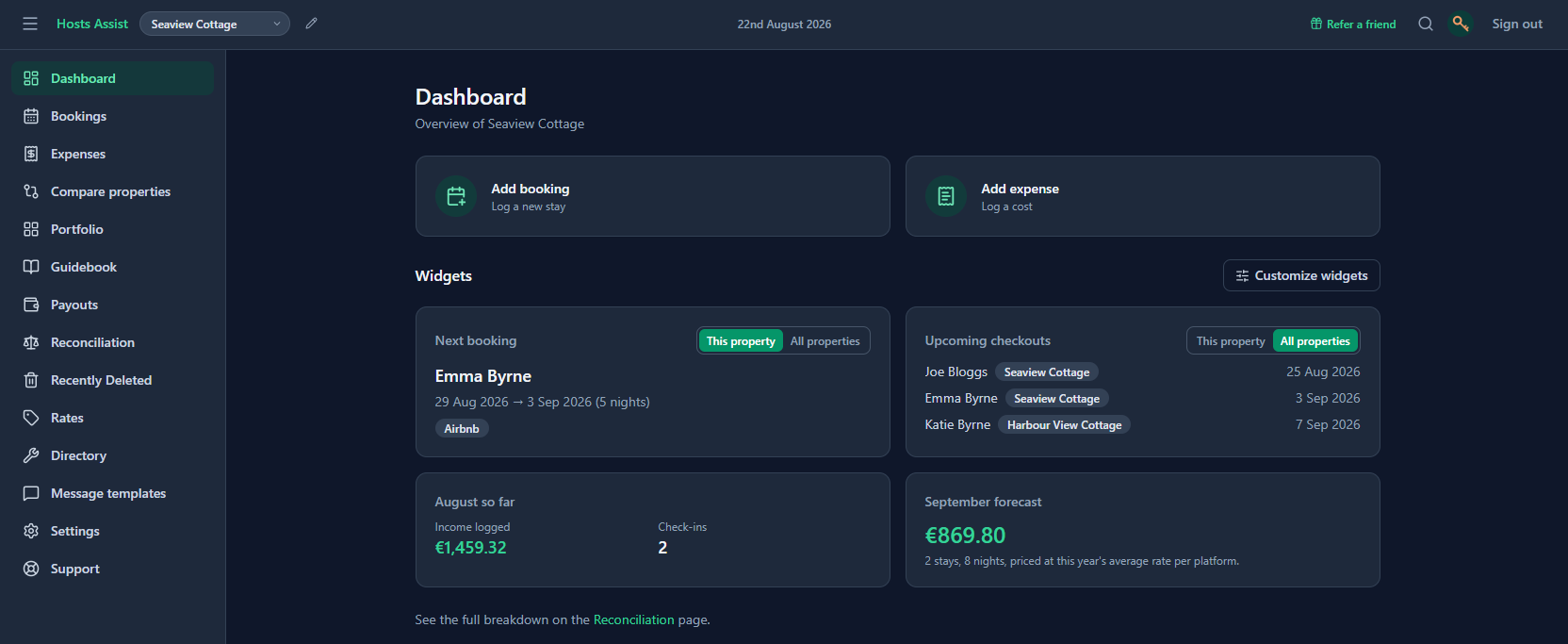
A direct comparison: see the full spreadsheet-vs-Hosts Assist breakdown, task by task, across bookings, money, guest communication, and more.
The actual decision
It's less "spreadsheet vs. software" as competing philosophies, and more a question of when the maintenance cost of the spreadsheet exceeds the cost of switching. For most hosts, that point arrives earlier than they expect: the first missed payout, the first formula error that costs a real afternoon to find and fix, or simply the first time checking numbers from a phone matters more than editing them on a laptop. One property is still a property worth running properly from day one, rather than waiting for a mistake to force the issue.