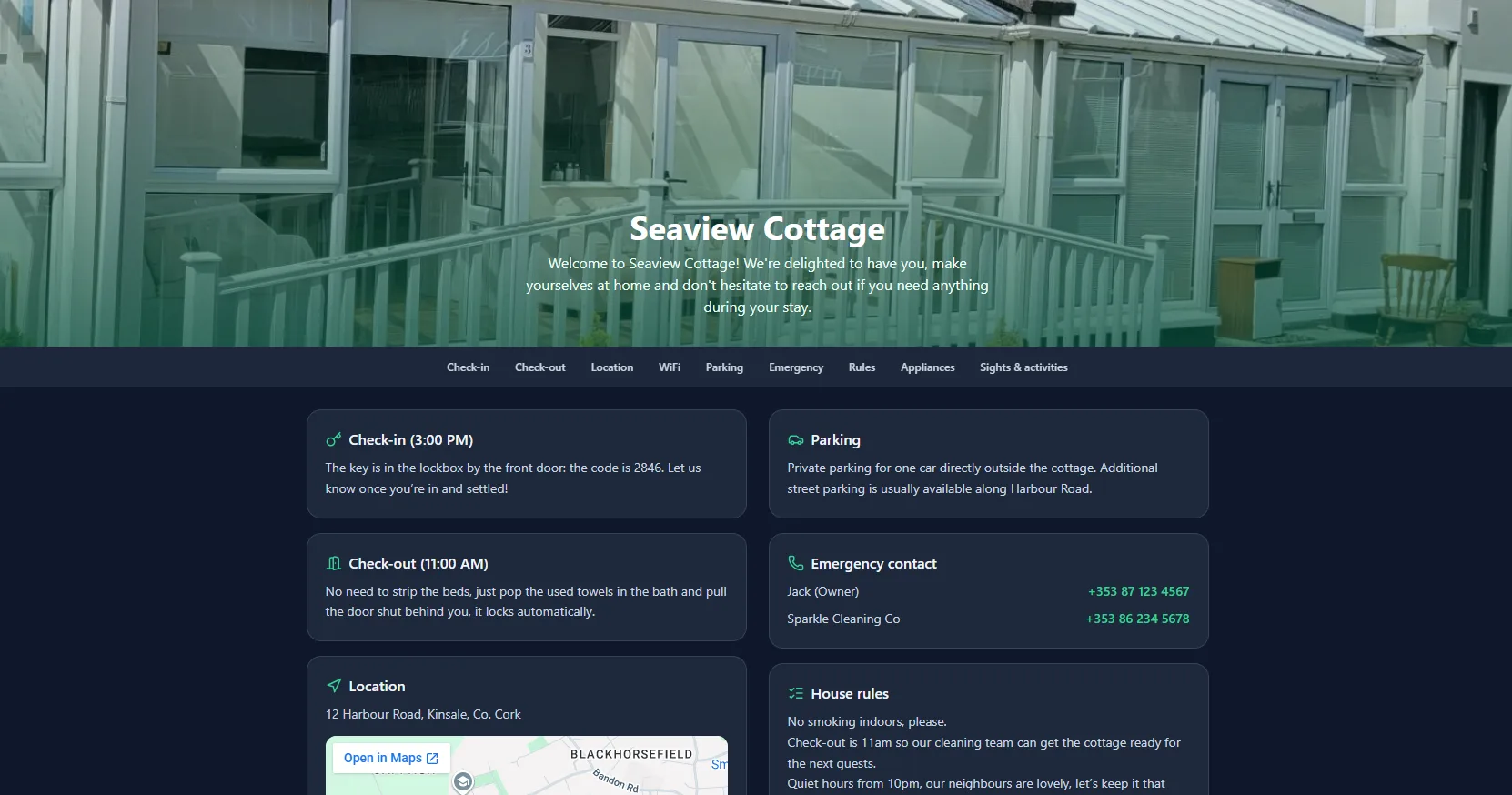
A digital guidebook only pays off if guests actually open it instead of just messaging you anyway. That comes down to what's in it: a page that's too sparse doesn't answer the question they had, and a page that's too long buries the one thing they needed under ten things they didn't. The sections below are the ones that consistently earn their place.
WiFi and check-in, right at the top
This is the single most-opened section, almost always in the first hour of a stay, often before a guest has even fully unpacked. Network name, password, door or key safe code, and where to park need to be immediately visible, not three scrolls down under a welcome essay.
How the fiddly things actually work
Every property has two or three things that aren't obvious to a first-time visitor: a shower that needs a specific twist, a washing machine with an unlabelled dial, heating controlled from an app rather than a thermostat on the wall.
These are exactly the questions that turn into an evening message otherwise — and exactly the ones a guidebook answers once, permanently, for every guest after.
A short, personal local list, not a tourist board dump
Guests can find "best restaurants in the area" on their own phone in ten seconds. What they can't get anywhere else is your actual opinion: the bakery you go to, the walk that isn't in any guide, the place that's good on a Tuesday but skip on a Saturday. A shortlist of five genuine picks beats twenty generic listings, and it's the section that makes a guidebook feel like it came from a real host rather than a template.
House rules, kept short and specific
Bin day, quiet hours, a request not to leave the gate open, whatever's actually relevant to that property. This is the one section where less is more: a long list of rules reads as distrustful, while three specific, genuinely necessary ones read as considerate.
What doesn't need to be there
A guidebook that tries to cover everything ends up being read for nothing. A few things are usually better left out, or kept to a single line at most:
- A full history of the property or area — nice to know, not what anyone opens the page to find
- Instructions for appliances a guest will never touch
- Anything better handled by a text message at the actual moment it's relevant (a delayed check-in, for instance)
How this works in Hosts Assist: the guidebook is a single shareable link and QR code per property, with dedicated sections for the basics, food & drink, and sights & activities kept separate so they're easy to scan rather than one long mixed list.
Link it, don't retype it
Once a guidebook exists, it's worth linking from everywhere a guest might need it, rather than retyping the same information into a check-in message by hand. A single source that stays current beats several copies that quietly drift out of date whenever the WiFi password changes.